
Table of Contents
About Chicken Kottu Roti
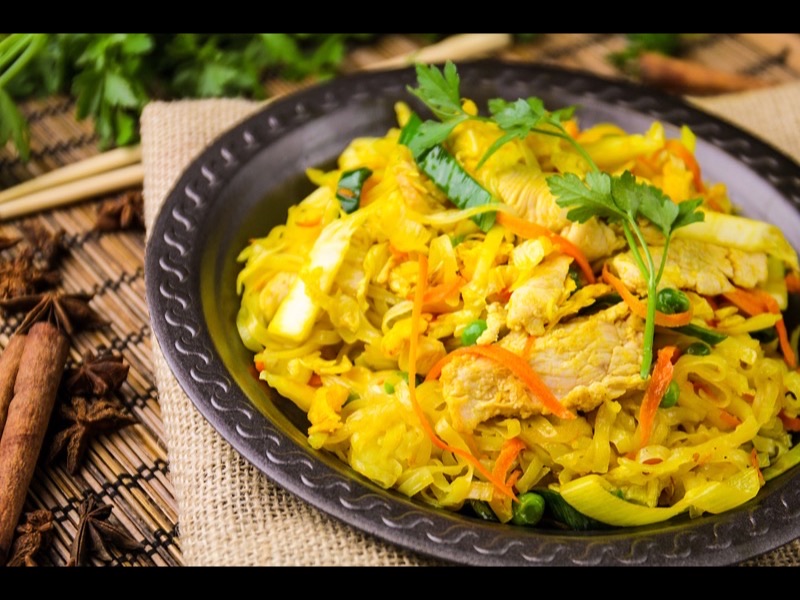
Chicken Kottu Roti is undoubtedly the most popular variety of kottu found across Sri Lanka. Walk through the streets of Colombo, Kandy, or Galle at night, and you will hear the unmistakable rhythmic clang of metal blades against the hot griddle as kottu makers chop and toss the ingredients with incredible speed and skill. The sound itself has become synonymous with Sri Lankan street food culture.
This recipe brings that authentic street food experience into your home kitchen. The key to great chicken kottu lies in three elements: well-seasoned chicken cooked in a rich curry sauce, properly shredded roti that holds its texture during cooking, and the high-heat stir-frying technique that gives kottu its characteristic slightly smoky, charred flavor. The vegetables - leeks, carrots, and onions - add freshness and crunch to balance the richness of the curry and roti.
In Sri Lanka, chicken kottu is typically made with bone-in chicken pieces that have been simmered in a thick curry. For this home version, we use boneless chicken thighs for convenience, but the flavor is equally authentic. The curry sauce is what ties everything together, coating each strand of roti with aromatic, spicy goodness.
Ingredients
For the Chicken Curry
- 300g boneless chicken thighs, cut into small pieces
- 1 tablespoon Sri Lankan roasted curry powder
- 1/2 teaspoon turmeric powder
- 1/2 teaspoon chili powder
- 1/2 cup thick coconut milk
- 5 curry leaves
- 1 small piece pandan leaf (rampe)
- 1 small piece cinnamon stick
- 1 small onion, sliced
- 2 cloves garlic, crushed
- 1/2 inch piece ginger, crushed
- Salt to taste
For the Kottu
- 4 godamba roti (or paratha/parotta), shredded into strips
- 2 tablespoons vegetable oil or coconut oil
- 1 large onion, finely sliced
- 2 leeks, washed and sliced into rings
- 1 medium carrot, julienned
- 3 green chilies, sliced lengthwise
- 4 cloves garlic, minced
- 1 inch piece ginger, finely minced
- 10 fresh curry leaves
- 1 tablespoon Sri Lankan roasted curry powder
- 1 teaspoon chili flakes (adjust to taste)
- 1 tablespoon soy sauce
- 2 eggs
- Salt and black pepper to taste
Step-by-Step Instructions
Step 1: Prepare the Chicken Curry
In a small saucepan, combine the chicken pieces with curry powder, turmeric, chili powder, and salt. Add the sliced onion, crushed garlic, crushed ginger, curry leaves, pandan leaf, and cinnamon stick. Pour in the coconut milk and add just enough water to barely cover the chicken. Bring to a boil over medium heat, then reduce to a simmer. Cook for 18-20 minutes until the chicken is tender and the sauce has reduced to a thick, rich gravy. Remove the chicken pieces and shred or dice them. Reserve the curry sauce separately - you will need about 4-5 tablespoons of this sauce for the kottu.
Step 2: Prepare the Roti
Take the godamba roti and tear or cut them into rough strips about 1-2 inches wide and 2-3 inches long. Do not cut them too small or they will become mushy during cooking. If using fresh roti, let them cool completely or even refrigerate for an hour. Day-old roti works best as it has dried slightly and holds its shape perfectly when stir-fried. Stack the roti, roll loosely, and slice with a sharp knife for even strips.
Step 3: Set Up Your Mise en Place
Kottu cooking happens extremely fast, so have everything ready before you start. Arrange all your sliced vegetables, prepared chicken, curry sauce, eggs, and spices within arm's reach. Once you start cooking, there is no time to chop or measure.
Step 4: Heat the Pan
Place a large wok, cast iron skillet, or heavy flat pan over the highest heat on your stove. Let it heat for at least 2-3 minutes until it is smoking hot. Add the vegetable oil and swirl to coat the surface. The oil should shimmer immediately.
Step 5: Aromatics and Vegetables
Toss in the curry leaves (careful, they will splutter), sliced green chilies, minced garlic, and minced ginger. Stir-fry for just 20-30 seconds until incredibly fragrant. Add the sliced onions and leeks, tossing vigorously on high heat for about 2 minutes. They should soften slightly but retain some crunch. Add the julienned carrots and stir-fry for another minute.
Step 6: Add the Eggs
Push the vegetables to the sides of the pan, creating a well in the center. Crack the two eggs into the center and let them sit for about 10 seconds until the bottoms set. Then roughly scramble them with your spatula and quickly mix them into the vegetables. The eggs should be in large, rough pieces, not finely scrambled.
Step 7: Add the Roti and Chop
Add all the shredded roti to the pan at once. This is where the magic happens. Using two metal spatulas (or a spatula and a large knife held flat), begin chopping and tossing the roti together with the vegetables. Use firm, rhythmic chopping motions to break the roti into smaller pieces while mixing everything together. Continue for about 2 minutes, ensuring the roti is evenly distributed with the vegetables and eggs.
Step 8: Add Chicken and Sauce
Add the cooked chicken pieces to the pan. Pour 4-5 tablespoons of the reserved curry sauce over the mixture. Sprinkle the remaining curry powder, chili flakes, and soy sauce over the top. Continue the chopping and tossing action for another 3-4 minutes. The curry sauce should coat the roti strands evenly, giving everything a golden-brown color and rich flavor.
Step 9: Season and Serve
Taste the kottu and adjust the seasoning with salt and black pepper. The finished kottu should be slightly moist and well-coated with curry sauce but not soggy or wet. Each strand of roti should be distinct, not clumped together. Serve immediately on a hot plate or banana leaf, with the remaining curry sauce on the side for drizzling.
Tips & Tricks for Perfect Chicken Kottu
- Use day-old roti: Freshly made roti is too soft and will turn mushy. Cook your roti the night before and store in the fridge, or use store-bought paratha that has been cooked and cooled.
- High heat is essential: Kottu must be cooked on the highest possible heat. This is what creates that authentic smoky, slightly charred flavor that makes street kottu so addictive.
- Do not overcrowd the pan: If making a large batch, cook in two rounds. Overcrowding drops the temperature and steams the roti instead of frying it.
- The curry sauce makes or breaks it: A good chicken curry sauce is the soul of chicken kottu. Do not skip making the curry. The thick, coconut milk-based sauce is what gives kottu its distinctive Sri Lankan flavor.
- Use chicken thighs, not breast: Thigh meat is juicier and more flavorful. Breast meat can become dry and rubbery when chopped and stir-fried at high heat.
- Do not over-chop: The roti should be in visible strips, not reduced to crumbs. Stop chopping once the pieces are about 1 inch in size.
- Add a knob of butter: For extra richness, add a small knob of butter at the very end. This is a secret weapon of many popular kottu shops.
Nutrition Information
Per serving (approximate values):
| Nutrient | Amount |
|---|---|
| Calories | 520 kcal |
| Protein | 32g |
| Carbohydrates | 48g |
| Fat | 22g |
| Saturated Fat | 8g |
| Fiber | 4g |
| Sodium | 680mg |
| Cholesterol | 185mg |
Serve With
- Chicken curry sauce: Serve extra curry sauce on the side for drizzling or dipping.
- Lunu miris: A spicy onion and chili sambol that adds extra heat and tang.
- Fresh lime wedges: A squeeze of lime brightens all the flavors.
- Coconut sambol (pol sambol): The classic Sri Lankan condiment of scraped coconut, chili, and lime.
- Papadam: Crispy lentil crackers for added crunch.
- Cold beverage: Traditionally served with a cold Elephant House ginger beer or a plain iced tea.
Frequently Asked Questions
You can, but chicken thighs are strongly recommended. Thigh meat has more fat and connective tissue, which keeps it moist and flavorful even after being cooked in curry and then stir-fried at high heat. Chicken breast tends to dry out quickly and can become tough and rubbery in kottu. If you must use breast, cut it into very small pieces and be careful not to overcook it.
The best substitutes for godamba roti are Indian paratha (parotta), Malaysian roti canai, or even large flour tortillas. All of these have a similar layered, flaky texture that shreds well and holds up during high-heat cooking. Some people also use leftover chapati or even naan bread. Avoid using pita bread as it is too thick and becomes gummy. Whatever bread you use, make sure it is cooked, cooled, and slightly dried out before using.
The spice level of chicken kottu is entirely adjustable. Traditional Sri Lankan kottu is moderately spicy, using green chilies, chili flakes, and curry powder. For a milder version, reduce the green chilies to one, omit the chili flakes, and use a mild curry powder. For extra heat, add more green chilies, increase the chili flakes to 2 teaspoons, or add a teaspoon of Sri Lankan chili paste. You can also serve extra chili sauce on the side so each person can adjust their own spice level.
Advertisement